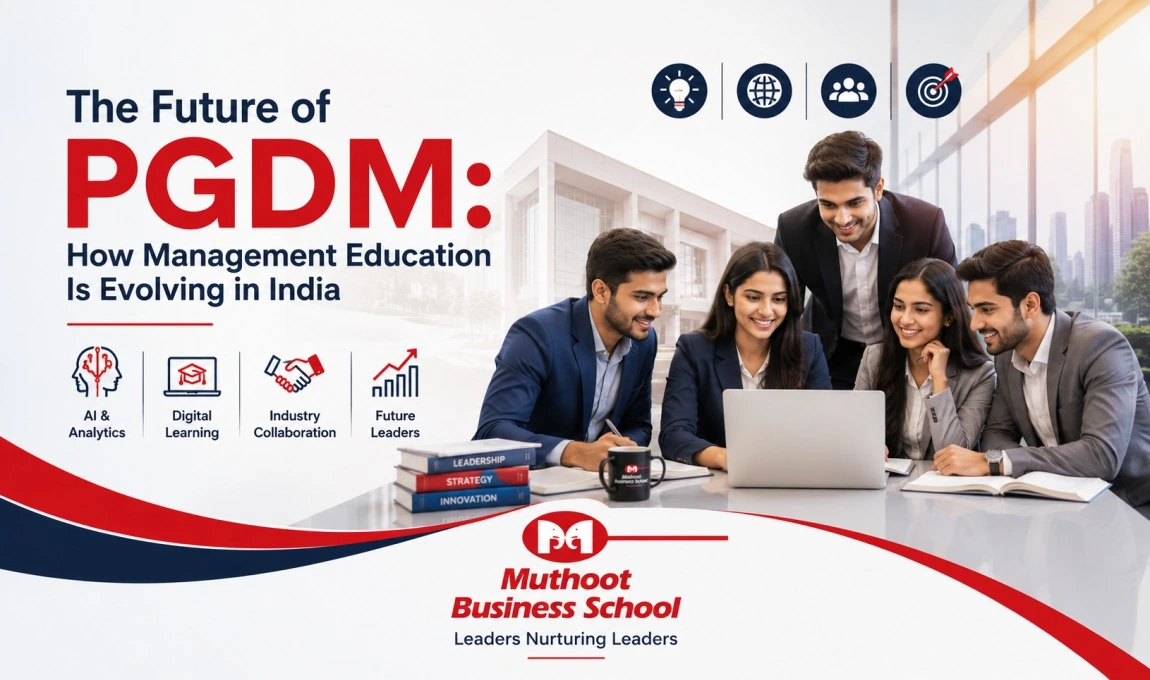
At MBS Global, we've watched this shift happen in real time, in the questions students ask during admissions counselling, in what recruiters tell us they're actually looking for, in the way faculty have had to rework case studies almost every semester just to keep them relevant. The old model, sit through lectures, memorise frameworks, write exams, just doesn't produce the kind of manager companies want to hire anymore. This piece is about what's replacing it, and what that means if you're choosing a PGDM course right now.
Part of it is the economy itself. Fintech, renewable energy, D2C, healthcare, these sectors barely existed at scale a decade ago and now they're hiring aggressively, often for roles that didn't have a job title yet in 2015. Part of it is global companies treating Indian hires the same way they'd treat hires anywhere else, which raises the bar considerably.
But a lot of it, honestly, comes down to AI. Not as a buzzword. This is actually changing how decisions get made inside companies. Give a first-year analyst the right AI tool and they can pull insights that would've taken a mid-level manager a full day, sometimes longer. So what's a manager even for anymore, if not for pulling the numbers? Mostly it comes down to asking the right question in the first place, and then knowing what to actually do once the answer's sitting in front of you. Management education in India is scrambling to catch up to that reality, some schools faster than others.
Specialisation is probably the biggest one. Ten years ago "general management" was still a selling point. Now students want a track, analytics, fintech, marketing, something they can point to in an interview and say "this is what I actually know how to do."
Live projects matter more than they used to as well. We've noticed students don't just want to hear about a business problem anymore, they want to sit in the room while it's being solved, and mess it up a few times before they get it right. That's a different kind of learning than a case study read the night before class. It's slower, messier, and it sticks.
Among the PGDM colleges in India that are adapting well, this is usually the common thread, less time spent explaining theory, more time spent applying it badly and learning from that.
Recruiters say this to us often enough that we've stopped being surprised by it. A strong resume gets a candidate into the room. It's what happens after that decides whether they get hired. Can they hold their ground when a client pushes back mid-meeting? Do they adjust the plan when it stops working, or just keep following it anyway? When a number on a dashboard looks off, do they actually dig into why, or just move past it and hope nobody asks?
Data literacy comes up constantly, but not in the way people expect. Nobody's asking PGDM graduates to write code. They're asking whether a graduate can look at a number that doesn't match expectations and figure out why, quickly, under pressure, in front of a client. That's a business leadership skill now, not a technical one.
We use AI tools in our own classrooms, for personalising how students move through material, for running business simulations that used to take a whole faculty team to design, for giving feedback on case write-ups faster than a human grader ever could. Does it replace faculty judgement? No. But it frees up faculty time for the parts of teaching that actually need a human, the mentoring, the pushback, the "why did you make that call" conversations.
AI in management education is mostly invisible when it's working well. Students don't notice the tool, they notice that their feedback came back in two days instead of two weeks.
Industry collaboration is the other half of this. A guest lecture is fine. A live brief from an actual company, with an actual deadline and actual stakes, teaches something a guest lecture can't. That's the difference between an industry-oriented PGDM on paper and one that actually functions that way.
If you're comparing the best PGDM colleges in India right now, ask uncomfortable questions. When was the syllabus last rewritten, and why? Ask to see it, not just hear about it. Talk to a current student, not just the admissions team, they'll tell you things a brochure won't.
Ask about faculty too. Are they still consulting or working in industry, or have they been teaching the same slides for a decade? And ask for real placement numbers, not just the highest package from three years ago repeated in every presentation since.
Some of our recent graduates are in roles that didn't exist when they started the program, AI product roles, sustainability-focused consulting, and growth strategy for D2C brands. Others went the traditional route, banking, FMCG, consulting, and found those roles now expect the same digital comfort that the newer sectors do anyway. The line between "traditional" and "new economy" careers has gotten blurrier than most people expect.
What we've noticed is that students who built a broad, transferable skill set during the program are the ones moving between industries later without much friction. That flexibility tends to matter more over a ten-year career than the first job title does.
Conclusion
None of this means technology is replacing management education, it's reshaping what's worth teaching. The future of PGDM belongs to programs willing to admit their syllabus from three years ago is already out of date, and do something about it. At MBS Global, that's the standard we're holding ourselves to, not because it's a trend, but because it's what actually prepares someone to lead.
How is the PGDM curriculum evolving to meet future industry demands?
It's moving away from theory delivered in lectures toward learning built around live projects and real business problems, updated far more frequently than a traditional syllabus ever was.
What are the latest trends shaping management education in India?
Specialisation, AI-assisted teaching, and closer ties with industry are the three things showing up again and again across programs that are actually changing rather than just saying they are.
What skills will employers expect from PGDM graduates in the coming years?
Beyond the basics, employers are looking for judgement under pressure, comfort with data, and the ability to adapt when a plan stops working halfway through.
How is AI transforming PGDM programs in India?
Mostly behind the scenes, faster feedback, more personalized learning paths, simulations that would've taken a full team to build a few years ago.
What should students look for in a future-ready PGDM program?
An updated syllabus they can actually see, faculty still active in industry, and placement numbers that hold up to a direct question.
How can a modern PGDM prepare students for leadership roles?
By putting students in front of real decisions early and often, so the first time they lead something difficult isn't also the first time they've ever tried.